Common Air Conditioning Repair Problems in Elgin IL Homes
Air conditioners in Elgin do not have an easy life. They sit through long winters, swing into humid spring weather, and then get pushed hard during summer heat waves that can make an upstairs bedroom feel like an attic by late afternoon. That seasonal stop-and-start pattern creates a very specific kind of wear. A system may seem fine in May, then fail the first week temperatures climb into the 80s and the unit runs for hours at a time.
Homeowners often assume an air conditioner either works or it does not. In practice, most repair calls start with smaller problems that build quietly. Airflow weakens. The thermostat drifts. The system gets louder. Utility bills creep up. By the time the house feels truly uncomfortable, the equipment has usually been signaling for attention for weeks or months.
In homes around Elgin, the most common service calls tend to repeat themselves. Some are simple, such as clogged filters or blocked condensate drains. Others involve failing capacitors, refrigerant leaks, dirty evaporator coils, frozen lines, blower motor trouble, or aging outdoor condensers that have lost efficiency. If you have been searching for air conditioning repair Elgin IL, there is a good chance one of these issues is already affecting comfort in your home.
Why Elgin homes see certain AC problems more often
Local conditions matter more than many people realize. A cooling system in a dry climate behaves differently than one in northern Illinois. Elgin homes deal with humidity, cottonwood fluff, pollen, dust from nearby roads or construction, and long off-seasons where equipment sits idle. Those conditions influence repair patterns.
Humidity is one of the biggest factors. Your air conditioner does not just lower temperature. It also removes moisture from indoor air. When humidity climbs, the system runs longer and works harder. That extra runtime exposes weak electrical components, stresses blower motors, and can turn a minor airflow restriction into an icing problem.
Housing stock matters too. Many Elgin neighborhoods include homes of very different ages. Some have older ductwork with leakage issues, undersized return air, or rooms that were added after the original HVAC design. In those homes, the air conditioner may not be the only problem. The system could be healthy, but poor airflow or duct imbalance makes it seem like the AC is AC installation Elgin IL failing.
That is why a good HVAC contractor Elgin IL does more than swap parts. The best diagnosis looks at the full picture, including equipment condition, duct design, insulation, thermostat performance, and how the home actually behaves in hot weather.
Capacitor failures and contactor problems
One of the most common midsummer breakdowns is a failed capacitor. Homeowners usually describe it the same way. The thermostat calls for cooling, the outdoor unit hums or clicks, but the system does not start properly. In some cases the fan tries to spin and stops. In others, the indoor air handler runs but the outdoor condenser never kicks on.
Capacitors help start and run motors. Over time, heat degrades them. That makes them especially vulnerable during the first real hot spell of the season, when a component that barely survived last year finally gives out. In the field, this is one of the most routine repair calls because the symptom feels dramatic even though the fix may be straightforward.
Contactors fail for similar reasons. They switch power to the outdoor unit and take a beating from repeated cycling. Pitted contacts, insects inside the cabinet, and simple age can all cause intermittent operation. A homeowner may notice the AC works some days and not others, which makes the issue frustrating to pin down. Intermittent faults are common in older systems and are a regular part of HVAC repair Elgin IL during summer.
The important detail here is that these are electrical components. They are not DIY-friendly for most homeowners. Power at the disconnect and capacitor charge both present real hazards. When the symptom is clicking, humming, or a fan that will not start, that is the point to call an HVAC company Elgin IL rather than keep resetting the thermostat and hoping for a different result.
Dirty filters, weak airflow, and frozen coils
Restricted airflow causes a surprising number of repair calls. It sounds minor, but the chain reaction can be expensive. When a filter is clogged, the system cannot move enough air across the evaporator coil. The coil temperature drops too low, moisture freezes, and the indoor unit can become a block of ice. At that point, cooling falls off sharply and the house gets warmer even though the equipment is running constantly.
This issue shows up often in homes with pets, remodeling dust, or high pollen loads. It also appears when a filter with too high a MERV rating is installed in a system that was not designed for that level of restriction. Homeowners sometimes buy the densest filter on the shelf, assuming more filtration is always better. In reality, too much restriction can hurt performance if the duct system and blower are already marginal.
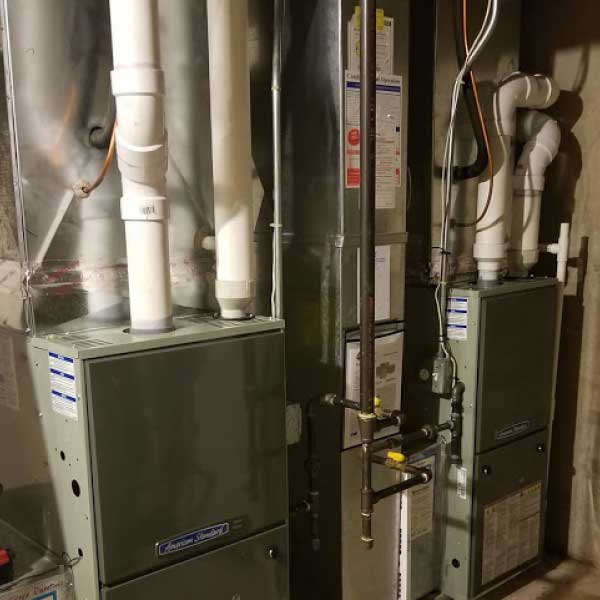
A frozen coil does not always mean low refrigerant. That is a common assumption, but not always the correct one. Low airflow is just as likely, sometimes more likely. I have seen systems thaw overnight, appear normal in the morning, and then freeze again by late afternoon because the underlying airflow problem was never addressed.
If supply vents are blowing weakly, rooms cool unevenly, or the air handler sounds strained, it is worth checking the basics before assuming major equipment failure. That simple check can prevent a service call from becoming a compressor problem later.
Refrigerant leaks and low cooling performance
Refrigerant leaks are among the more serious AC issues because they affect both performance and equipment longevity. A low refrigerant charge can leave the home feeling cool enough in mild weather, then completely unable to keep up during high heat. Homeowners often notice longer runtimes, warmer supply air, or a system that seems to cool the main floor but never quite satisfies the upstairs.
Leaks can occur at coil connections, service valves, line sets, or in the evaporator coil itself. Older equipment is especially vulnerable. Corrosion, vibration, and years of expansion and contraction all take a toll. When a system is low on charge, simply topping it off without locating the leak is usually a short-term bandage. The cooling may improve for a while, but the refrigerant will escape again, and the system will continue to operate under strain.
This is where judgment matters. On a relatively new system with a repairable leak, a proper repair often makes sense. On an aging unit with a leaking evaporator coil, the numbers may point toward replacement, especially if efficiency has already dropped and other parts are wearing out. That is when conversations about AC installation Elgin IL begin to make more sense than repeated repair bills.
A trustworthy technician should explain the trade-off clearly. If the repair is durable and cost-effective, say so. If the system is near the end of its useful life and likely to need more work soon, homeowners deserve that honesty too.
Condensate drain clogs and water where it should not be
Not every air conditioning repair starts with warm air. Some start with water stains, a damp mechanical room floor, or a safety switch that shuts the system down. In cooling mode, the indoor coil removes moisture from the air, and that water has to drain away properly. When the condensate line clogs, it backs up.
Algae, sludge, dust, and microbial growth commonly build inside drain lines, especially in humid conditions. In some homes the first sign is a musty smell. In others, the air conditioner simply stops because a float switch detects standing water in the drain pan and shuts the system off to prevent overflow.
This is one of those issues that sounds trivial until it damages drywall, flooring, or a finished basement ceiling. In homes with the air handler above living space, a blocked drain can create more mess than many major mechanical failures. Regular maintenance sharply reduces the odds of this kind of shutdown.
For homeowners juggling both summer cooling and winter service needs, this is one reason it helps to work with one reliable provider for heating and air conditioning Elgin IL. The same company that handles seasonal cooling tune-ups can usually spot drain issues, blower problems, and furnace concerns before they turn into emergency calls.
Thermostat problems that imitate equipment failure
A surprising percentage of service calls end with thermostat issues, not failed compressors or bad motors. Sometimes the thermostat is simply out of calibration. Sometimes batteries are weak. Sometimes the thermostat is installed in a poor location, such as near a sunny window, above a supply register, or on a wall affected by attic heat.
Smart thermostats add convenience, but they also add more variables. Scheduling errors, Wi-Fi disconnections, compatibility problems, and incorrect setup for multi-stage equipment can all create strange behavior. A homeowner may think the AC is short cycling or ignoring temperature settings, when the real problem is a control issue.
In older homes, thermostat wiring can also cause intermittent problems. Loose low-voltage connections may lead to random shutdowns that are hard to reproduce during a short service visit. Good technicians know to look beyond the obvious when symptoms do not fit a straightforward mechanical failure.
Thermostat issues often feel less urgent because the unit may still run part of the time. The trouble is that poor control leads to discomfort, unnecessary energy use, and extra wear from erratic cycling. If your system cools unevenly or seems to have a mind of its own, the thermostat deserves as much attention as the outdoor condenser.
Blower motor trouble and hot upstairs rooms
When homeowners say, "The AC is running but the house still feels stuffy," the indoor blower is often part of the story. The blower motor pushes conditioned air through the duct system. If it weakens, overheats, or runs at the wrong speed, comfort falls off fast.
Variable-speed motors, common in newer systems, can improve comfort and humidity control, but they are more complex than older single-speed designs. When they fail, symptoms may look subtle at first. Airflow becomes inconsistent. The system runs longer. Certain rooms never quite cool down. Eventually the motor may stop entirely or trip out on protection.
In two-story Elgin homes, airflow problems are especially noticeable upstairs. A home with mediocre duct design can limp along during mild weather, then reveal every weakness during a humid July stretch. Not every hot second floor means the blower motor is failing, but blower performance is always part of the diagnostic picture.
Duct leakage and dirty blower wheels can make matters worse. Even when the motor itself is fine, accumulated debris on the wheel reduces how much air it can move. That is one reason seasonal service is not just about "checking the Freon." A careful technician looks at air movement, cleanliness, amperage, and overall system behavior.
Outdoor condenser issues after rough winters
Outdoor units spend half the year exposed to snow, ice, wind, and debris. By spring, technicians often find disconnected insulation, bent coil fins, rodent damage to wiring, and debris packed into the condenser coil. Cottonwood and grass clippings are common summer culprits too. When the outdoor coil gets dirty, the system cannot reject heat efficiently, and pressures rise.
That leads to longer runtimes, reduced cooling, and higher energy bills. In extreme cases, the compressor overheats and shuts down. Because the compressor is one of the most expensive components in the system, anything that reduces condenser performance deserves prompt attention.
Physical location matters here. Units placed near landscaping, dryer vents, or fences may struggle with restricted airflow. I have seen perfectly good condensers handicapped by overgrown shrubs and years of matted debris. Cleaning and clearance can restore a surprising amount of performance when the problem is caught early.
Older condensers also face normal age-related wear. Fan motors get noisy. Insulation on wires becomes brittle. Service valves start to seep. The unit may still run, but reliability becomes less predictable. At that stage, the question is often whether to keep repairing or plan for replacement before a total breakdown during peak heat.
When AC problems are really ductwork problems
Not every comfort complaint belongs to the air conditioner itself. Leaky ducts, undersized returns, crushed flex duct, and poor balancing can all mimic AC failure. Homeowners may say one side of the house is always hot, or that the system never stops running, even after previous repairs.
This is especially common in homes with finished basements, additions, bonus rooms over garages, or older duct systems that were never designed for modern comfort expectations. If the air handler cannot pull enough return air, or if conditioned air leaks into an attic or crawl space, the equipment may be doing its job while the house still feels uncomfortable.
This is where an experienced HVAC Elgin IL professional separates themselves from a parts changer. Real diagnosis means measuring temperatures, pressures, static pressure, and airflow rather than assuming every complaint needs refrigerant or a new thermostat. In some cases, modest duct modifications solve a problem that homeowners have blamed on the AC for years.
Signs that justify a service call sooner rather than later
Some symptoms can wait a day or two. Others should move higher on the priority list because they can damage the system or create safety concerns.
- Warm air from the vents when the thermostat is set to cool
- Ice on refrigerant lines or the indoor coil area
- Loud buzzing, grinding, or repeated clicking at startup
- Water leaking around the indoor unit
- Breakers tripping when the AC tries to run
Catching problems at this stage often keeps repairs smaller. Waiting tends to convert manageable issues into expensive ones, especially when compressors or blower motors are forced to run under bad conditions.
Repair or replace, the judgment call homeowners wrestle with
There is no universal rule for when an air conditioner should be replaced. Age matters, but so do repair cost, refrigerant type, energy use, noise, and how well the system matches the house. A ten-year-old unit with a minor electrical failure is one thing. A fifteen-year-old unit with a leaking coil, weak compressor performance, and poor humidity control is another.
In Elgin, where homeowners rely on the same contractor for summer cooling and winter furnace service, these decisions often overlap with broader system planning. If the furnace is also aging, pairing upgrades may make sense. If the AC is failing but the furnace is still solid, a targeted replacement can be the smarter path. The right answer depends on condition, budget, and how long the homeowner plans to stay in the house.
It also depends on service history. A unit that needed one modest repair in eight years is different from a unit that has required repeated capacitor changes, refrigerant additions, and blower work. Those patterns matter. So does comfort. If your current system leaves bedrooms muggy, struggles on peak days, and costs more to run every summer, replacement can deliver value that goes beyond avoiding another breakdown.
For homeowners also thinking ahead to winter, a company that handles both air conditioning repair Elgin IL and furnace repair Elgin IL can help map out a realistic plan. Sometimes the next smart step is repair. Sometimes it is a scheduled upgrade before the emergency call comes in the middle of July or January.
What helps prevent the most common breakdowns
Preventive care is not glamorous, but it works. The majority of common AC repairs are tied to dirt, neglect, wear that went unnoticed, or systems operating with poor airflow.
A practical maintenance routine usually includes these steps:
- Replace filters on schedule appropriate for the home, not just the box recommendation
- Keep the outdoor unit clear of grass, leaves, and overgrown shrubs
- Have refrigerant, electrical components, drain lines, and blower performance checked seasonally
- Pay attention to new sounds, uneven cooling, and unexplained humidity
- Address small performance changes before the first major heat wave
That sort of attention does not eliminate repairs entirely. Parts still fail, and older systems still age out. What it does is reduce surprise breakdowns and improve the odds that your equipment reaches its expected lifespan without major collateral damage.
For many households, the most efficient approach is building a relationship with one HVAC company Elgin IL that knows the home, the equipment history, and the comfort trouble spots. That familiarity matters. It speeds diagnosis and often leads to better recommendations because the technician is not starting from zero every visit.
A dependable cooling system is easy to take for granted until it stops on a humid afternoon. In Elgin homes, the same issues show up year after year because the climate, the housing stock, and the wear patterns are consistent. Capacitors fail. Coils get dirty. Drain lines clog. Motors weaken. Refrigerant leaks develop. Duct defects reveal themselves under heavy summer load.
When those problems are diagnosed correctly, many are manageable. The key is recognizing that warm air, weak airflow, excess humidity, strange noises, or water around the unit are not minor annoyances. They are early warnings. A skilled HVAC contractor Elgin IL can sort out whether the fix is simple maintenance, a focused repair, or a larger conversation about AC installation Elgin IL or even heating repair Elgin IL if the overall system is aging together.
Comfort in summer rarely comes down to one part alone. It is the result of equipment condition, airflow, controls, and a house that all need to work together. When they do, the system runs quieter, cools more evenly, and handles Elgin’s humid stretches with a lot less drama.